Infrastructures of Courtesanship: Material Histories of Performing Women in South Asia, 1700-1900
About the Project
Infrastructures of Courtesanship is a research project supported by the Durham University Seedcorn Fund (2026). This project aims to reconstruct the material, architectural, and visual worlds of courtesans in South Asia (c.1700–2000), analyse how built environments shaped performance, patronage, and sociability and develop interdisciplinary methods combining archival, visual, and digital approaches.
The research project will advance spatial and material histories of gender and performance in South Asia, move beyond text-based archives to centre architecture and visual culture, contributes to global histories of urbanism, performance, and gender and develop innovative interdisciplinary and digital humanities methods
Architectural History
“This project explores the architectural histories of courtesans in South Asia, asking how the built environment can help us recover the lives, labour, networks, and cultural worlds of women whose histories have often been marginalised or erased.
We approach architecture at multiple scales: from the urban neighbourhoods shaped by kothas and the markets that grew around them, to gardens, mansions, mosques, imambaras, tombs and other structures commissioned or patronised by elite courtesans. We also turn to the more intimate and ephemeral spaces of everyday life—the kotha, the mehf/il, the caravanserai, the travelling camp—asking how their spatial arrangements, objects, materials and technologies shaped performance, sociability, domestic life and professional networks.
The project brings together architectural and urban history with archival research, visual and material culture, oral history and ethnographic approaches. It is particularly attentive to the processes through which colonial and postcolonial regimes of morality and respectability transformed courtesans’ relationships to property, cities and architecture, even as traces of their presence persisted in buildings, neighbourhoods, stories and memories.
By reading architecture alongside these fragmentary traces, we seek to understand courtesanship not simply as a profession or cultural practice, but as a spatial and social world that helped shape South Asian cities.”
– Dr Parshati Dutta, Architectural Historian
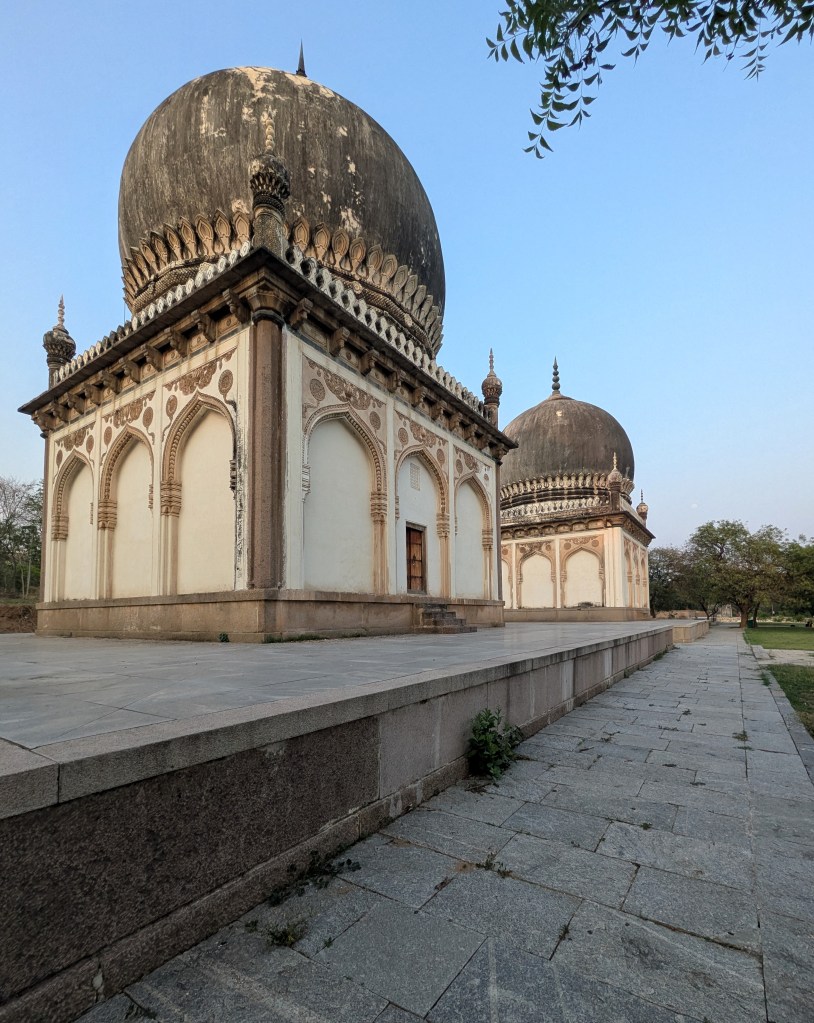
Image by Dr Parshati Dutta
Art History
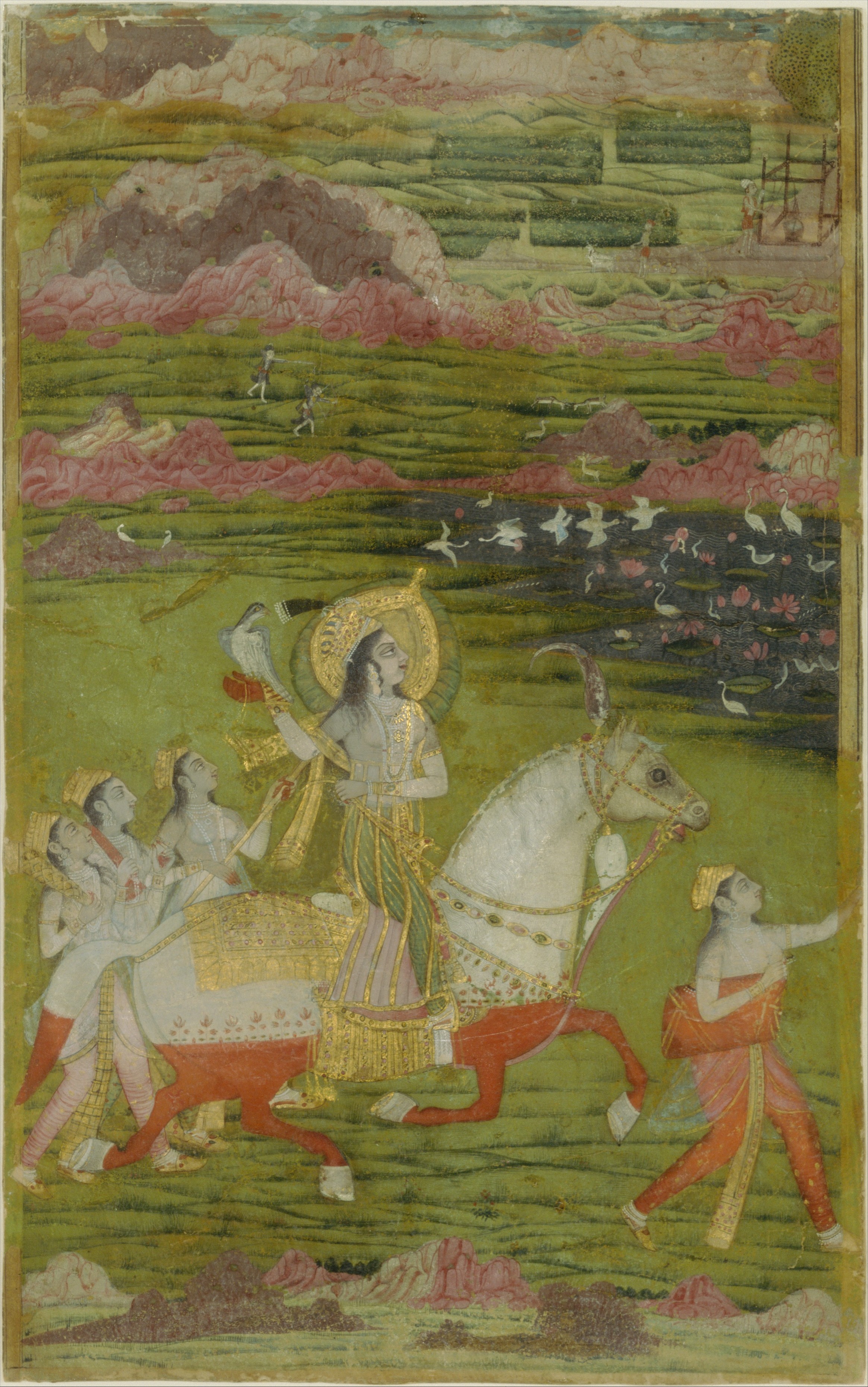
“Paintings serve as a visual archive through which some aspects of the lives of elite courtesans and performers can be studied. In this project, the focus is primarily on Pahari paintings – paintings made in the former kingdoms of the northwestern Himalayas, c. 1600-1900, but includes comparative images from other parts of South Asia, such as Rajasthan and the Deccan. An art historical analysis of visual materials allows us to study not just how these women used space but also the material culture of the domestic and courtly environments within which they lived and performed.
In addition to studying these paintings through an art historical lens, this project also uses Digital Humanities tools to analyse a large corpus of images to reveal preferences for colours, postures, costumes, and musical instruments, among other details.”
– Dr Vrinda Agrawal, Art Historian
How did performing women inhabit and transform urban infrastructures and architectural spaces? Beyond the frame of performance, what can material and visual approaches reveal about their everyday lives and labour? How did infrastructures of performance intersect with gender and colonial modernity?
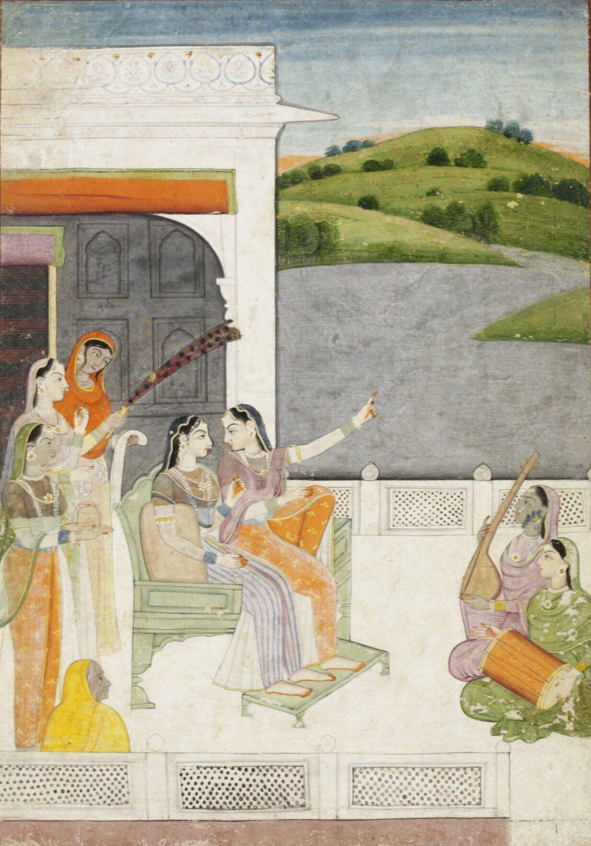
Detail from painting depicting ‘two ladies on a terrace listening to music’, Guler
school, ca. 1750, opaque watercolour on paper, 302mm x 232mm © Victoria & Albert Museum, IS.133-1949.

